2015–2017 Ford F-150 downshift recall: what owners should know
A faulty range-sensor signal can drop the truck from sixth gear to second and lock the rear wheels. Owners reported it for years before the April 2026 recall.

The short answer
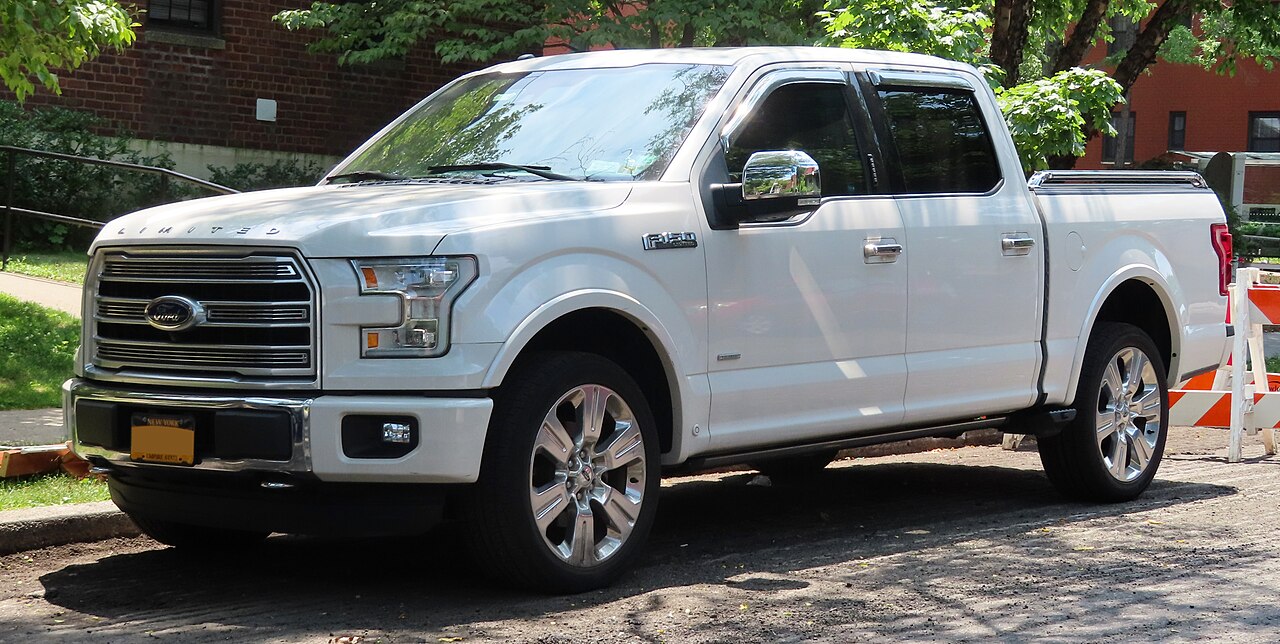
In April 2026 Ford recalled 1,392,935 F-150 pickups from the 2015, 2016 and 2017 model years that have the six-speed 6R80 automatic transmission. On these trucks the transmission range sensor can briefly send the engine computer a wrong signal, and the computer responds by shifting from sixth gear straight down to second. At highway speed that sudden drop slows the rear wheels hard enough to make them skid, which is how a driver can lose control.
The recall is NHTSA campaign 26V237 (Ford's number is 26S28). The fix is a free software update to the powertrain control module at a Ford or Lincoln dealer. Trucks that have already logged the related fault codes also get a new transmission lead frame under an extended warranty. Ford's own estimate is that about 1% of the recalled trucks actually carry the defect, but because the trucks were not built in VIN order, every owner in the range needs to check.
If you own a 2015–2017 F-150, the useful questions are whether your VIN is included, whether the update has been done, and what to do if it happens to you before then. This guide answers those, and then sets out what owners were telling NHTSA long before the recall.
What the recall covers
Ford's defect report to NHTSA, filed on April 14, 2026, describes the trucks and the failure in plain terms (Part 573 report, 26V237):
- Vehicles: 2015–2017 Ford F-150 with the 6R80 six-speed automatic, built from March 12, 2014 to August 18, 2017.
- The part: the transmission range sensor (TRS) and the lead frame, the internal wiring assembly that carries its signal.
- The cause: thermal cycling and vibration degrade electrical connections inside the lead frame, so the engine computer briefly reads a wrong gear-selector position.
- The result: a temporary, unintended downshift from sixth to second gear. Some trucks also turn on the check-engine light or the wrench light.
- The remedy: a powertrain control module calibration, free of charge. Trucks that have already stored the matching trouble codes get a lead frame replacement under an extended warranty program.
Ford's chronology in the same filing lists 891 vehicles behind the reports it had gathered by April 2, 2026: 444 warranty claims, 121 field reports, 105 customer-service reports and 316 owner questionnaires sent to NHTSA (some trucks appear in more than one). It counted one crash and two injuries that may be related.
The 2017 model year needs care. The 2017 F-150 was sold with either the older 6R80 six-speed or the newer 10R80 ten-speed, and only the six-speed trucks are in this recall. If your 2017 has the ten-speed, this campaign is not yours, though the VIN lookup is still the quickest way to be sure.
How the investigation got here
This recall did not start with Ford. According to the same chronology, NHTSA's Office of Defects Investigation sent Ford a batch of owner complaints about unintended downshifts on October 30, 2024. NHTSA opened a preliminary evaluation, PE25-002, on March 21, 2025, and upgraded it to an engineering analysis, EA26-001, on January 30, 2026 (NHTSA investigation document, EA26-001). Ford's field review committee approved a recall on April 7, 2026.
The engineering analysis adds detail that the recall filing does not:
- NHTSA identified 329 owner complaints and interviewed about 60% of those owners. Around 43% of the owners it interviewed described at least one rear-wheel lockup.
- 114 owners reported that the lead frame or the whole valve body had already been replaced, and 80 of those repairs were confirmed by invoices.
- NHTSA's test center found a second risk. If the range-sensor signal drops while the truck is backing up a slope, the transmission can go to neutral and the truck can roll forward.
Opening an engineering analysis is a step NHTSA takes when it wants to test components and vehicles, not just read complaints. Our guide to how NHTSA investigations work explains each stage.
Not the first F-150 downshift recall
Older F-150s had a similar-sounding problem. Ford recalled 2011–2013 F-150s with the 6R80 in campaigns 16V-248, 19V-075, 19V-433 and 24V-444. Those involved a different signal, from the output shaft speed sensor, and lead frames made with a supplier production fault, which could cause a downshift from sixth to first gear. Ford told NHTSA it considers the 2015–2017 problem distinct. For an owner the symptom feels much the same, which is one reason complaints about the newer trucks were easy to read as "the old recall" and slow to be recognized as a new one.
What owners reported before the recall
We counted the owner complaints filed with NHTSA for 2015–2017 F-150s, as the federal complaints file stood on September 21, 2026. These are unverified owner accounts, counted once per complaint number, and they cover all 2015–2017 F-150s, including 2017 trucks with the ten-speed.
- Across those three model years, 5,189 complaints are on record. 1,519 of them name the power train.
- 844 describe a downshift or rear-wheel lockup in their own words. 554 of those were filed before the recall date, April 14, 2026.
- The timing is the striking part. Complaints describing the downshift ran at one to three dozen a year until 2023. Then 97 were filed in 2024, 211 in 2025, and 136 in the first three and a half months of 2026, before the recall.
- 152 of the downshift complaints mention the lead frame by name, usually because a dealer had already replaced it.
- The median mileage stated in those complaints is about 92,000 miles. That fits the cause Ford gave: connections that wear with years of heat cycles and vibration, not a fault present from new.
The owners' descriptions match the recall closely. One wrote that at about 65 mph the truck "abruptly" dropped "to 1st or 2nd gear", slowing hard enough that a following driver could have hit it. Another described the transmission downshifting "very hard causing the rear end to lock up" three times at 60–65 mph on the interstate. About 30 complaints mention the truck rolling or slipping into neutral, the second risk NHTSA's testers reproduced.
What the record does not tell you is how likely your truck is to fail. Complaint counts follow how many trucks were sold and how many owners chose to file, and we have no sales figures by model year. The pattern over time, though, is real, and it is the part of this story that a reader deciding whether to buy a high-mileage 2015–2017 F-150 should weigh.
You can see each year's full record, including its other recalls and how it compares with the rest of its generation, on the 2015, 2016 and 2017 F-150 pages, and every year side by side on the Ford F-150 model page.
What to do if you own one
Check the VIN. Enter your 17-character VIN at NHTSA's recall lookup or on Ford's owner site. Ford made the VINs searchable from April 15, 2026. Because the trucks were not built in VIN order, a neighbor's truck tells you nothing about yours.
Get the update done. The software calibration is free, and Ford mailed the remedy letters to owners in mid-July 2026. If you have not had one, call a Ford dealer with your VIN. If your truck has already shown the related fault codes, ask the dealer about the lead frame replacement under the extended warranty program.
If it happens while you are driving: keep both hands on the wheel, avoid sudden steering, and pull over when it is safe. A downshift with rear-wheel lockup is most dangerous on wet or icy roads and on curves, so until the update is done, leave more room behind the car in front and be gentle in bad weather. Owners report that the fault often clears after a restart and then comes back; that is not a fix.
When reversing on a slope: use the parking brake once stopped, and do not rely on the transmission alone to hold the truck until the remedy is done.
Report it. If your truck has done this, file a complaint at NHTSA's safety complaint form. The complaints owners filed are what started this investigation.
If you are buying a used one: ask for the dealer's recall completion record for 26V237 and for any lead frame or valve body repair invoices. A truck that has had the lead frame replaced is not necessarily a worse truck; one that has shown the symptom and had only the software update deserves a closer look.
What this page cannot tell you
We read the federal record: complaints, recalls and investigations. We cannot say whether a given truck will fail, and we cannot verify owners' accounts. Ford's estimate that about 1% of recalled trucks carry the defect is Ford's, not ours. If your truck is downshifting on its own, do not wait for a letter: take it to a dealer.
The vehicles this covers
Sources
This piece reads recall, complaints, investigation, Ford Part 573 report 26V237, NHTSA ODI resume EA26001. Recall campaign 26V237000. Investigation EA26001. How every figure on this site is counted is set out on the methodology page. Whether a particular car is affected by a recall depends on its VIN.
More Ford coverage
 2023–2027 Ford F-150 fuel tank strap recall: VIN rulesRecalls | yesterday
 F-150 downshift investigation EA26-001 stays open after the recallInvestigations | 5 days ago
 Ford recalls 1.39 million 2015–2017 F-150s for sudden downshiftsRecalls | 6 days ago
- NHTSA audits a rental company over cars rented with open recallsInvestigations | 9 days ago