2013–2018 Toyota RAV4 battery fire recall: what owners should do
The 1.0-liter three-cylinder runs its timing belt in oil. Belt debris can clog the oil pump. NHTSA opened an engineering analysis in July 2026; there is no recall yet.
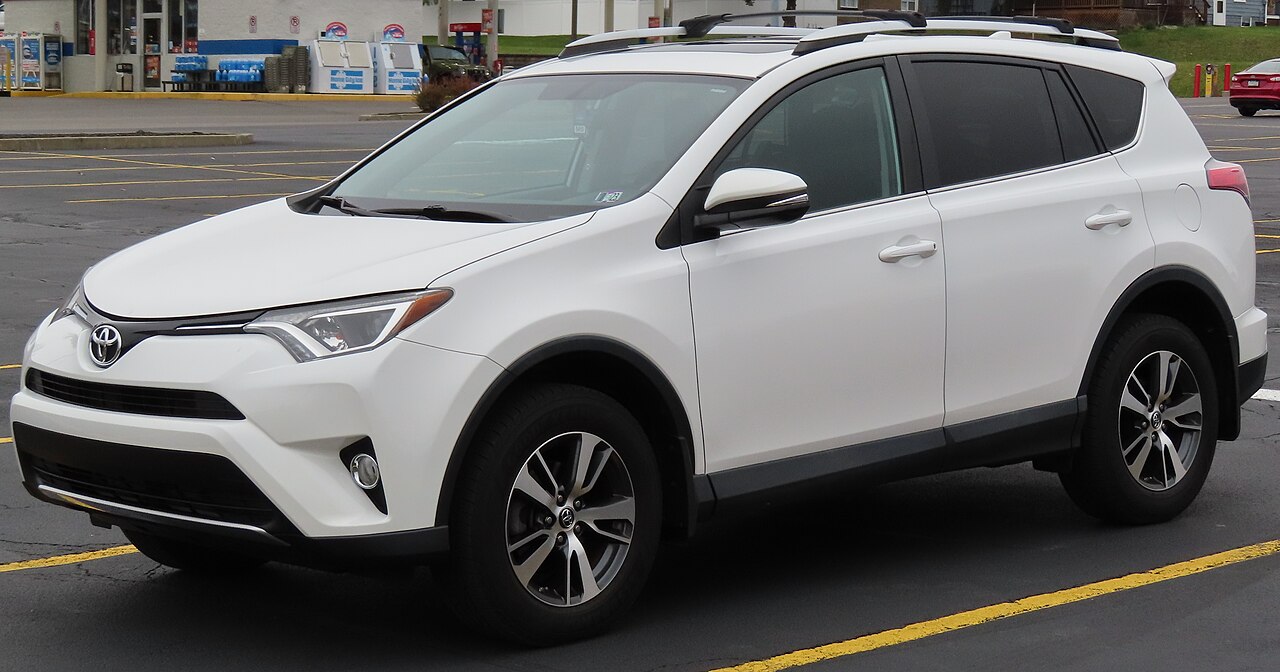

The short answer
Toyota recalled 1,853,568 RAV4s from the 2013 to 2018 model years, built from November 2012 to November 2018, because the 12-volt battery can short-circuit against the metal clamp that holds it down. The fault is not in the battery Toyota fitted at the factory. It happens when a replacement battery with a smaller top is installed, the clamp is not tightened properly, and the battery shifts in a hard turn until its positive terminal touches the clamp. The short can produce heat and start a fire in the engine compartment.
The recall is NHTSA campaign 23V-734. At a dealer, Toyota replaces the battery clamp, the battery tray and the positive terminal cover with redesigned parts, free. Owners who paid for this repair earlier can ask for reimbursement.
The detail that matters for most owners: the risk depends on the battery in the car now, and most RAV4s from these years are old enough to be on a replacement battery.
Why a battery that fits can still be the wrong one
Toyota's defect report explains the mechanism (Part 573 report, 23V-734). The RAV4 is specified for a battery of the size SAE Group 24F. Some replacement batteries sold for it are Group 35, which have a smaller top case. A Group 35 battery fits in the RAV4's tray, and a shop can clamp it in, but there is more room for it to move. Combine that with a tray larger than the battery and a hold-down that is not torqued correctly, and strong sideways forces in a fast turn can slide the battery far enough for the positive terminal to reach the clamp.
That is why the fix is the tray, the clamp and the terminal cover rather than the battery: the redesigned parts hold a battery of either size and keep the terminal covered.
Toyota could not estimate how many RAV4s actually carry the condition. Its filing enters "1%", and explains that the figure is a placeholder that means "unknown".
How the investigation and recall unfolded
NHTSA's Office of Defects Investigation opened a preliminary evaluation, PE21-005, on February 25, 2021, covering an estimated 1,862,103 RAV4s from 2013 to 2018 (NHTSA opening resume, PE21-005). The opening document described what investigators had seen:
- thermal events, meaning fire or burning, on the left side of the engine compartment, where the battery sits;
- most of them while the car was being driven, and four with the ignition off;
- in half of the cases while driving, the car stalled before the fire;
- in most incidents reviewed, the 12-volt battery as the area of origin, with the battery's positive terminal shorting to the hold-down frame;
- improper battery installation, or earlier front-end crash repairs, as a factor in many manufacturer field reports;
- battery-origin fire allegations above those of comparable vehicles.
Toyota filed the recall in November 2023, with dealer notification on November 1. Interim letters to owners were planned for late December 2023, and letters announcing the remedy were planned from September 2024, when parts became available. NHTSA closed PE21-005 in August 2024. Our guide to how NHTSA investigations work explains what a preliminary evaluation is and how one can end.
What owners reported
We counted the owner complaints filed with NHTSA for the 2013–2018 RAV4, as the federal file stood on September 21, 2026. They are unverified accounts, counted once per complaint number.
- 1,695 complaints are on record for the six model years. In 163 of them the owner marked the complaint as involving a fire. That is about one complaint in ten. Across the 156 Ford and Toyota model years from 2010 to 2020 with at least 200 complaints on record, the typical share reporting a fire is about 0.6%, and nine in ten are below 2.5%.
- 234 complaints describe fire, smoke, burning or melting in the owner's words, and 89 connect that with the battery.
- The battery-fire complaints came late. Only 7 were filed before 2021. Then 15 were filed in 2021, the year the investigation opened, and 24 in 2024, the year the remedy arrived. Their median stated mileage is about 70,000 miles, by which many cars are on a replacement battery.
- 196 complaints mention the battery at all, and 46 of them were filed in 2024. Many describe a car that would not start or stalled while driving, the symptom that, according to NHTSA, preceded the fire in half of the driving cases.
Two readings of this record are possible, and both are probably true. The recall made owners aware, so more of them filed. And the condition depends on a replacement battery, so it appears more as the fleet ages. Either way, the pattern points owners of older RAV4s to the same action: check the battery and get the recall done.
Each year's page has its full record, including this campaign: 2013, 2015, 2016, 2017 and 2018 RAV4. The 2014 has no page of its own; its figures, and every year side by side, are on the RAV4 model page.
What to do if you own one
Check the VIN. Enter it at NHTSA's recall lookup or on Toyota's owner site and book the repair. It is free, and the parts were scheduled to reach dealers by November 2024.
Look at the battery. Open the hood. The battery's label shows its group size. If it says Group 35, or the battery looks loose or smaller than its tray, have it checked before your appointment and avoid hard cornering.
When you next replace the battery, ask for the size Toyota specifies, Group 24F, and ask the installer to tighten the hold-down to specification. A smaller battery held by a loose clamp is exactly the condition this recall describes.
Treat a stall or a burning smell seriously. If the car stalls while driving, or you smell burning plastic from the left front, pull over safely, turn the engine off, get everyone out and stay away from the engine bay. Do not open the hood if you see smoke.
Keep receipts. If you paid to replace the clamp, tray or terminal cover before the recall, ask Toyota for reimbursement.
If you are buying a 2013–2018 RAV4: ask for proof that 23V-734 has been done, and check the battery size yourself.
What this page cannot tell you
We do not know which battery is in a given car, and the federal complaint file does not record battery size. Not every fire reported in a RAV4 is this defect. Toyota's own filing says it cannot estimate how many vehicles are affected; neither can we.
The vehicles this covers
Ford EcoSport 2018 2019 2020 2021
Sources
This piece reads recall, complaints, investigation, Toyota Part 573 report 23V734, NHTSA ODI resume PE21-005. Recall campaign 23V734000. Investigation PE21005. How every figure on this site is counted is set out on the methodology page. Whether a particular car is affected by a recall depends on its VIN.
More Ford coverage
 2023–2027 Ford F-150 fuel tank strap recall: VIN rulesRecalls | yesterday
 F-150 downshift investigation EA26-001 stays open after the recallInvestigations | 5 days ago
 Ford recalls 1.39 million 2015–2017 F-150s for sudden downshiftsRecalls | 6 days ago
 2015–2017 Ford F-150 downshift recall: what owners should knowGuides | 7 days ago