Ford 1.0 EcoBoost timing belt failures: Fiesta, Focus, EcoSport
The 1.0-liter three-cylinder runs its timing belt in oil. Belt debris can clog the oil pump. NHTSA opened an engineering analysis in July 2026; there is no recall yet.
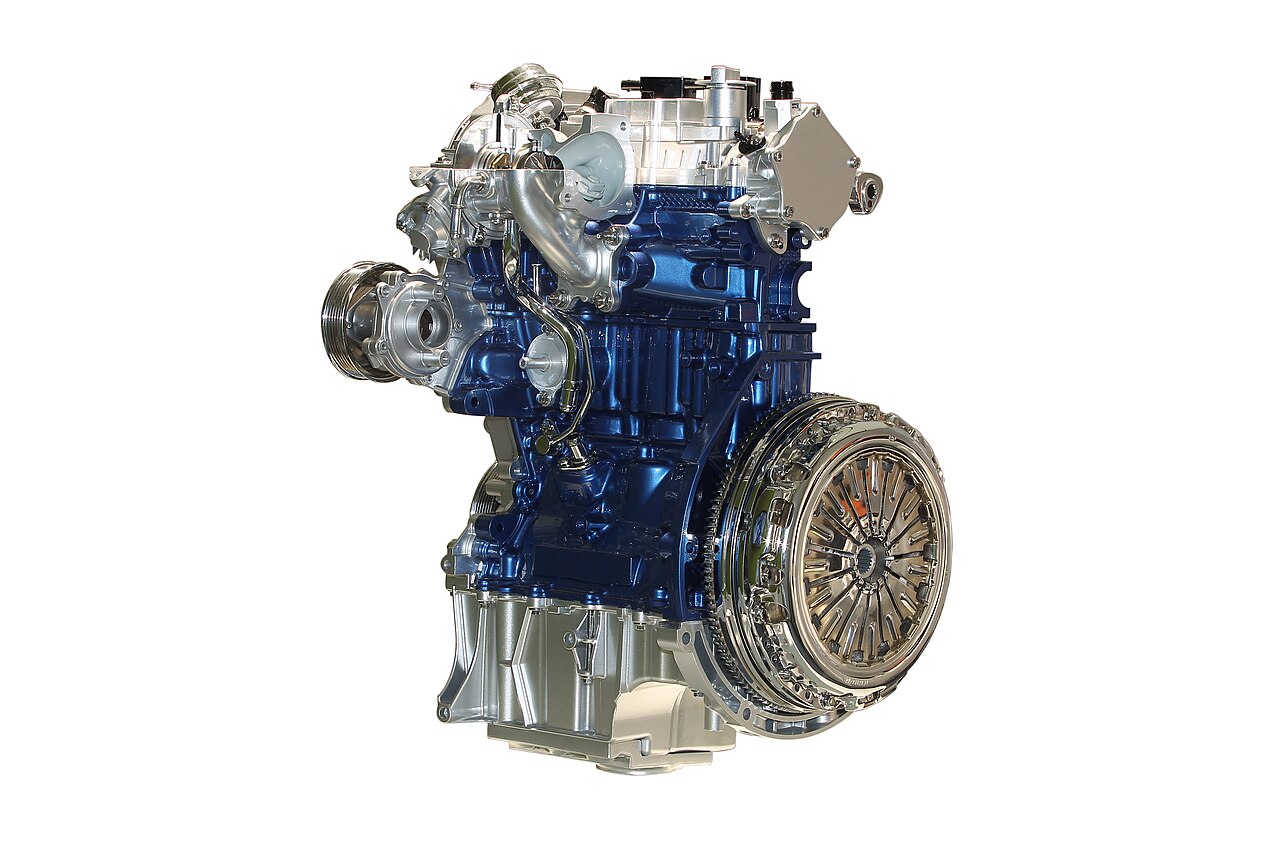

The short answer
Ford's 1.0-liter three-cylinder EcoBoost engine, sold in the U.S. in the 2014–2017 Fiesta, the 2015–2018 Focus and the 2018–2021 EcoSport, drives its camshafts with a rubber timing belt that runs inside the engine, bathed in oil. Owners report that the belt wears and sheds fragments, the fragments collect in the oil pump's pickup, oil pressure drops, and the engine loses power or stops while the car is moving. Often the only warning is the low-oil-pressure light, seconds before.
NHTSA has been investigating since December 2025 and upgraded the case to an engineering analysis, EA26-004, on July 31, 2026. In its September 2026 information request to Ford, the agency asked Ford to back up its claim that "regular oil changes prevent this condition" (NHTSA letter to Ford, EA26-004). As of October 2026 there is no recall for the timing belt. Ford has instead shortened the belt's replacement interval and set up a customer satisfaction program.
If you own one of these cars, the first job is to find out whether it has the 1.0-liter engine at all. Most Focuses and every 2014–2017 Fiesta ST do not.
Two different belts, two different problems
There are two belts inside this engine, and they have caused two separate federal actions. It is easy to confuse them.
The oil pump drive belt: recalled in 2023. Recall 23V-905, filed by Ford on December 22, 2023, covers 139,730 vehicles: 26,041 2016–2018 Focus and 113,689 2018–2022 EcoSport with the 1.0-liter engine and the 6F15 automatic (Part 573 report, 23V-905). The tensioner arm for the oil pump drive belt can fracture or come away from its backing plate, and the belt itself can lose teeth. Either way the pump stops turning and oil pressure falls. Ford said the belt carried more load than its validation testing had assumed. The fix is a new tensioner with a bolted joint and a new belt, free at a dealer.
The timing belt: under investigation now. NHTSA's information request says plainly that the failure modes addressed by recall 23V-905 "are non-responsive" to the timing belt allegation. In other words, a car that has had the oil pump recall done is not protected from the timing belt problem. The current investigation covers the 2014–2017 Fiesta, 2015–2018 Focus and 2018–2021 EcoSport, manual and automatic.
What the investigation has found so far
NHTSA's documents and the reporting around them give a fairly clear picture:
- The mechanism. Owners allege that fragments of timing belt material wear off and accumulate inside the oil pump. NHTSA's letter cites Ford's own track test of a fully clogged pump, which "observed momentary drops in oil pressure".
- The trend. Ford's warranty data, as cited by NHTSA, shows failures increasing from January 2024, with a different failure rate between automatic and manual cars.
- The mileage. According to AutoGuide's report on the upgrade, the average reported failure comes at about 70,000 miles, and about 98% of documented failures happened before Ford's original 150,000-mile belt replacement interval. The engineering analysis covers an estimated 135,551 vehicles.
- Ford's response so far. A non-safety customer satisfaction program, which NHTSA's letter calls the "1.0L Fox Classic Timing Belt" program, cuts the replacement interval from 150,000 miles to 100,000 miles or six years. The reporting also describes reimbursement for eligible repairs. NHTSA asked Ford for the documents behind that program, and gave Ford until October 30, 2026 to respond.
An engineering analysis can end with a recall, with a closure, or with an agreement short of a recall. Our guide to how NHTSA investigations work explains the stages.
What the complaint record shows, and what it cannot
We searched the owner complaints filed with NHTSA for these cars, as the federal file stood on September 21, 2026.
- The record cannot tell engines apart. NHTSA's complaint file records the make, model and year, but not the engine. A 2016 Focus complaint could be about the 1.0-liter or the far more common 2.0-liter. That is why the model-year pages on this site cannot isolate this problem, and why a reader should not judge a Focus year by its complaint total alone.
- Owners name the belt more and more. 52 complaints about these three models from 2014–2021 mention the timing belt. Only 4 were filed before 2022; 18 were filed in 2024 alone, matching the January 2024 rise in Ford's warranty data.
- The symptom NHTSA describes shows up in owners' words. 15 of those complaints connect the timing belt with an oil pressure warning, the sequence the agency describes: oil light, then loss of power.
- Engine and power-loss complaints for the 2015–2018 Focus rose too. 328 complaints describe an engine failure, a stall, low oil pressure or lost power. 111 of them were filed in 2024. Some of those are the 2.0-liter, and some are the oil pump belt; the timing belt is one of several explanations.
Each car's page carries its full record, including the oil pump recall where it applies: the 2015, 2016, 2017 and 2018 Focus, the 2014, 2015 and 2016 Fiesta, and the 2018, 2019, 2020 and 2021 EcoSport. The 2017 Fiesta has no page of its own; its figures are on the Fiesta model page.
How to tell whether your car has the 1.0-liter
- Look at the badge and the paperwork. The 1.0 was sold as an option, usually called "1.0L EcoBoost" or the "SFE" package on the Fiesta, and on the Focus as an option on SE trims. The window sticker, the original invoice or the registration often names the engine.
- Use the VIN. The eighth character of a Ford VIN identifies the engine. A dealer can confirm it in seconds, and a free VIN decoder will usually show it.
- Count the cylinders. The 1.0 is a three-cylinder; at idle it has a distinctive, slightly uneven sound compared with a four-cylinder.
- Every 2018–2021 EcoSport with front-wheel drive has the 1.0; the all-wheel-drive EcoSport has a 2.0-liter.
What to do if you own one
Check for the oil pump recall. If you have a 2016–2018 Focus or a 2018–2022 EcoSport with the 1.0 and the automatic, run the VIN at NHTSA's recall lookup for 23V-905 and get it done. It is free.
Ask about the timing belt program. Call a Ford dealer with your VIN and ask whether the customer satisfaction program covers your car, and what it pays for. If the belt is near 100,000 miles or six years old, plan to replace it regardless.
Change the oil on time, with the right oil. Ford says oil changes prevent the condition; NHTSA has asked Ford to prove it. Either way, short intervals and the specified oil cost little and do no harm. Keep the receipts: they matter if you later ask Ford to pay for a failure.
Treat the low-oil-pressure light as an emergency. If it comes on while you are driving, pull over as soon as it is safe and turn the engine off. Do not drive on to see whether it goes out.
Report it. If your engine failed, file a complaint at NHTSA's safety complaint form with the mileage, the engine size and what the shop found. NHTSA's letter lists 57 owner complaints behind this case; each one counts.
What this page cannot tell you
There is no recall for the timing belt yet, and we cannot say whether there will be. The failure figures above are Ford's and NHTSA's as reported; the complaint counts are ours. We cannot tell from the federal record which engine a given complaint concerns.
The vehicles this covers
Ford EcoSport 2018 2019 2020 2021
Ford Focus 2015 2016 2017 2018
Sources
This piece reads recall, complaints, investigation, NHTSA information request EA26004, Ford Part 573 report 23V905, AutoGuide report on the EA26-004 upgrade. Investigation EA26004. How every figure on this site is counted is set out on the methodology page. Whether a particular car is affected by a recall depends on its VIN.
More Ford coverage
 2023–2027 Ford F-150 fuel tank strap recall: VIN rulesRecalls | yesterday
 F-150 downshift investigation EA26-001 stays open after the recallInvestigations | 5 days ago
 Ford recalls 1.39 million 2015–2017 F-150s for sudden downshiftsRecalls | 6 days ago
 2015–2017 Ford F-150 downshift recall: what owners should knowGuides | 7 days ago