Ford PowerShift transmission: 2011–2016 Fiesta and Focus guide
The PowerShift dual-clutch was never recalled for its shudder and slipping. Ford extended warranties instead. The federal complaint file is one of the largest for any small car.

The short answer
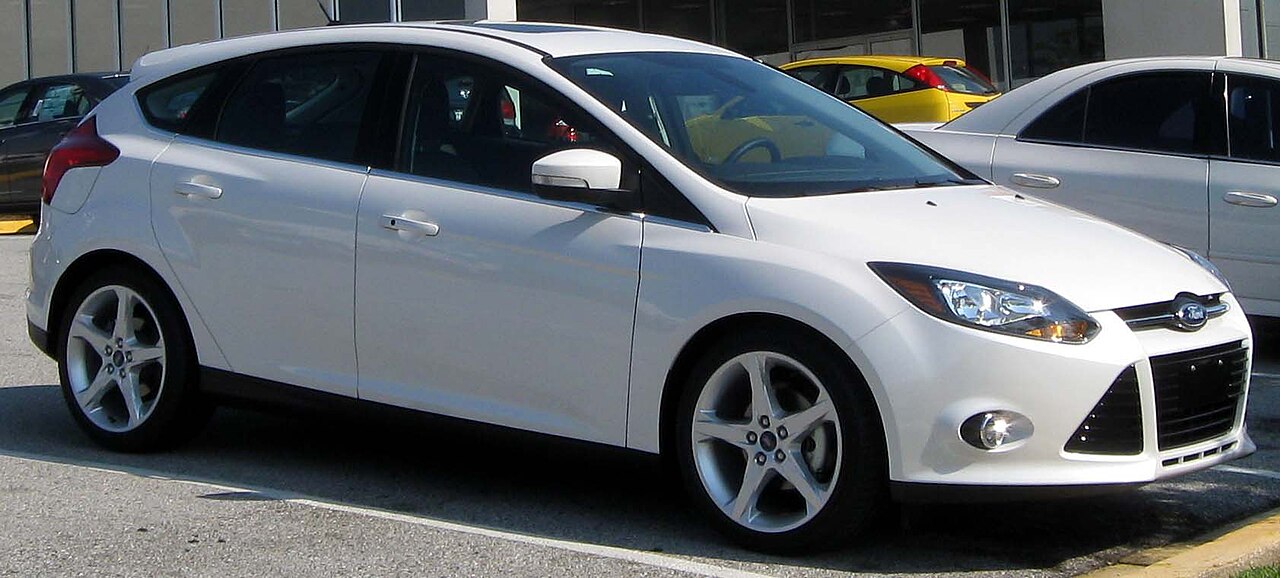
From the 2011 model year, the Ford Fiesta, and from 2012 the Ford Focus, were sold in the U.S. with an automatic transmission called PowerShift, internally the DPS6. It is a dual-clutch design: in effect two manual gearboxes run by computer-controlled dry clutches. It was meant to give the fuel economy of a manual with the ease of an automatic. In daily use many owners got shuddering when pulling away, harsh or delayed shifts, slipping, and in some cases a sudden loss of drive, the car dropping into neutral or rolling back on a slope.
There was never a safety recall for the shudder and slipping. Ford responded with software updates, clutch replacements under extended warranties, and, in 2017, a class-action settlement. NHTSA said in 2019 that it had found no evidence of an unreasonable risk to safety and would keep watching complaints.
If you own one, or are thinking of buying one cheaply, the questions are which warranty extension applies, whether the clutches have been replaced, and how to tell a car that has been fixed from one that has not.
What the transmission does wrong
Dry dual-clutch transmissions are sensitive to clutch wear, to fluid getting onto the clutch faces, and to the software that decides how hard to engage them. In the PowerShift, seals could let transmission fluid reach the clutches, and the clutch actuators and the transmission control module could fail. The symptoms owners describe most often:
- a judder or shudder when moving off from a stop, especially when the car is warm;
- a hesitation, then a lurch, when the driver presses the accelerator;
- slipping, a rise in engine speed without the car accelerating;
- harsh downshifts as the car slows;
- the car slipping into neutral or losing drive, sometimes in traffic.
How Ford handled it
Ford's approach was warranty and software, not a recall.
- Extended coverage in stages. Ford extended the warranty on the clutches and related parts for older cars first. In August 2019 it extended clutch coverage to seven years or 100,000 miles and the transmission control module to ten years or 150,000 miles for about 560,000 more cars in the U.S. and Canada: 2014–2016 Focus built before November 5, 2015 and 2014–2015 Fiesta built before October 15, 2014 (Associated Press report, August 2019). With that step, every Fiesta and Focus with PowerShift built before the second half of 2015 had extended coverage. Ford said cars built after that point had factory fixes.
- Reimbursement. The 2019 extension included reimbursement for owners who had paid for clutch repairs themselves.
- The class action. In 2017 Ford settled a class action covering 2012–2016 Focus and 2011–2016 Fiesta owners with the dual-clutch transmission, about 1.9 million cars, with payments of up to $2,325 and repair reimbursements. Ford said the 2019 warranty extension was not related to the settlement.
- The July 2019 reporting. A Detroit Free Press investigation reported that engineers had warned the transmission was not ready before launch (summary in CarScoops). Ford denied knowing about the problems before sale; its powertrain engineering vice-president said resolving them had taken too long.
The federal file does list small recalls on these cars, for example a 2013 campaign for the transmission control module on 2,456 2012–2014 Focuses, but none of them covers the clutch shudder and slipping that most owners describe.
What owners reported
We counted the owner complaints filed with NHTSA, as the federal file stood on September 21, 2026. They are unverified, counted once per complaint number, and cover every version of each car: the complaint file does not record which transmission a car has, so manual cars are in these totals too.
- The 2012–2016 Focus has 10,857 complaints on record; the 2011–2016 Fiesta has 2,952. The 2012 Focus, the first year with PowerShift, has 3,801, more than any other year of its generation.
- Half of them name the power train. 5,432 of the Focus complaints and 1,444 of the Fiesta ones name the power train.
- The symptoms match. 4,813 Focus complaints and 1,164 Fiesta complaints describe shudder, judder, hesitation, slipping, jerking, lurching, the clutch, rolling back or dropping into neutral. Their median stated mileage is about 49,000 miles for the Focus and 39,000 for the Fiesta.
- Loss of drive is not rare in the record. About 1,600 Focus and 430 Fiesta power-train complaints describe rolling back, slipping into neutral, losing power or stalling.
- Complaints follow the news. Focus complaints were filed at 800–1,400 a year from 2015 to 2018, then jumped to 1,917 in 2019, the year of the Free Press investigation and the warranty extension, before falling back to 796 in 2020.
That last point is a lesson about complaint data in general, not just this car. Owners file when they learn that others have the same problem and that filing might matter. A jump in complaints in one year can reflect publicity as much as new failures. It is one reason this site compares a year with other years of the same generation over the same span of time, rather than with other cars.
The model-year pages carry each year's record: the 2012, 2013, 2014, 2015 and 2016 Focus, and the 2011, 2012, 2013, 2014, 2015 and 2016 Fiesta.
If you own one
Find out what has been done. A Ford dealer can look up the car's warranty and repair history by VIN, including clutch replacements and software updates. Ask for a printout.
Check whether coverage remains. Seven years or 100,000 miles from the original in-service date has now passed for almost every car. The transmission control module coverage, ten years or 150,000 miles, has also expired for most; for late cars, check the exact date with a dealer. If you paid for a covered repair while the extension applied, ask Ford about reimbursement.
Do not ignore a sudden loss of drive. Shudder is a nuisance; a car that slips into neutral in traffic is a hazard. If yours does it, have it inspected and file a complaint at NHTSA's safety complaint form.
If you are buying one
These cars are cheap for a reason. A manual Focus or Fiesta does not have this transmission. An automatic needs a test drive that includes pulling away from a stop on a slight incline, stop-and-go traffic once the car is warm, and gentle acceleration from a walking pace, the conditions in which shudder shows. Ask for the clutch and control module repair history. A car whose clutches were replaced under warranty with the updated parts is a better bet than one that has never been touched and drives smoothly only when cold.
What this page cannot tell you
We cannot say how many PowerShift cars failed, or how likely a particular one is to fail. The complaint file includes manual cars and other faults, and owners' accounts are not verified. The warranty and settlement details are as reported at the time; the terms that apply to a particular car are Ford's to confirm.
The vehicles this covers
Ford Fiesta 2011 2012 2013 2014 2015 2016
Ford Focus 2012 2013 2014 2015 2016
Sources
This piece reads recall, complaints, Ford warranty extension 2019, class action settlement 2017, Detroit Free Press investigation 2019. How every figure on this site is counted is set out on the methodology page. Whether a particular car is affected by a recall depends on its VIN.
More Ford coverage
 2023–2027 Ford F-150 fuel tank strap recall: VIN rulesRecalls | yesterday
 F-150 downshift investigation EA26-001 stays open after the recallInvestigations | 5 days ago
 Ford recalls 1.39 million 2015–2017 F-150s for sudden downshiftsRecalls | 6 days ago
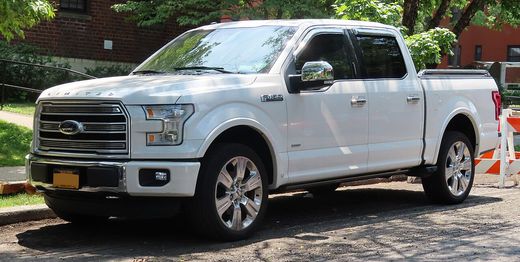 2015–2017 Ford F-150 downshift recall: what owners should knowGuides | 7 days ago