Toyota Tundra V35A engine recall: 2022–2024 owners' guide
Debris left in the V35A engine can wreck a main bearing. Three recalls now cover 2022–2024 Tundras, and half of all complaints about these trucks name the engine.
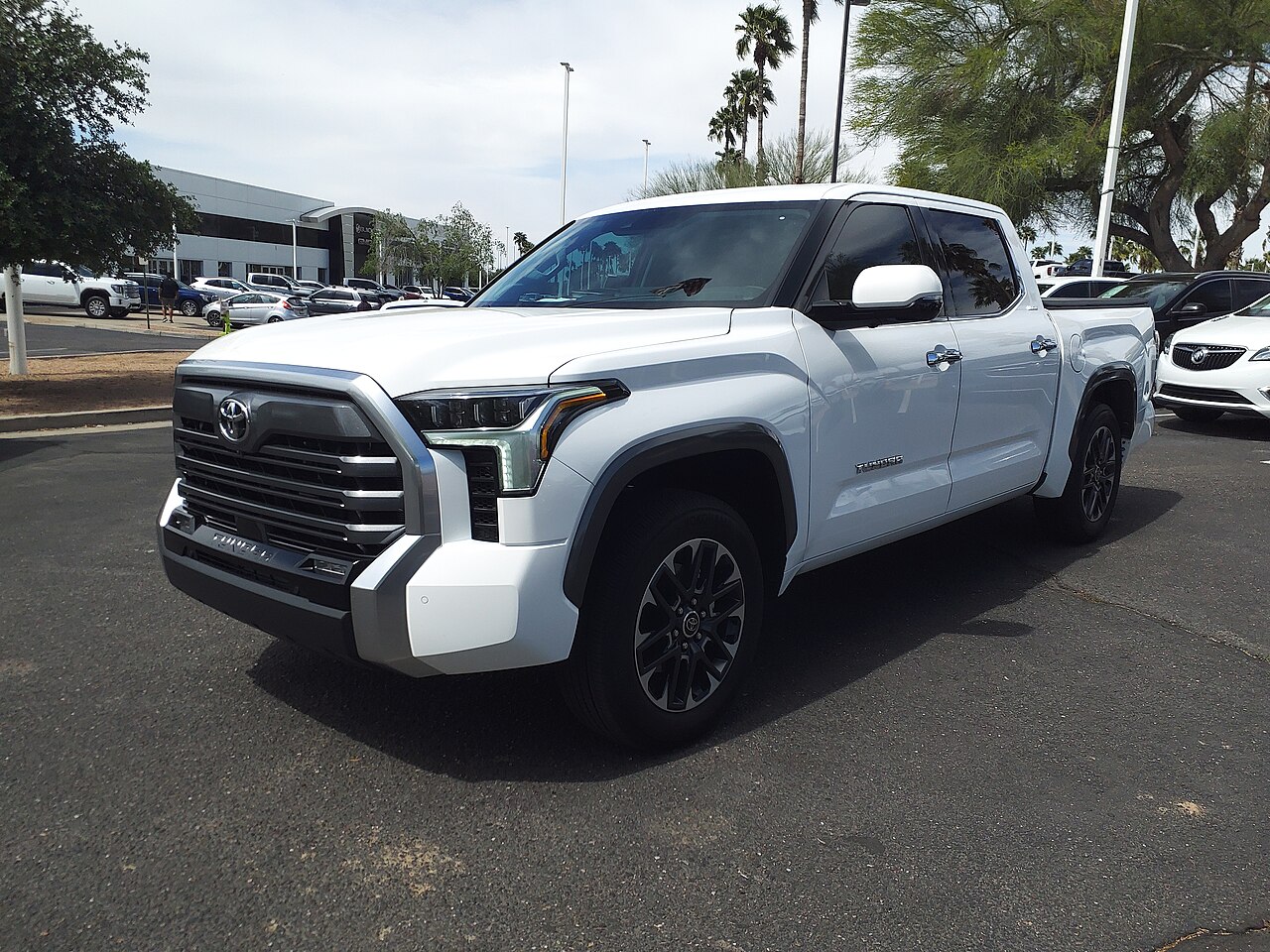

The short answer
The third-generation Toyota Tundra, sold from the 2022 model year, uses a 3.4-liter twin-turbo V6 that Toyota calls the V35A. During part of its production, machining debris was not fully cleaned out of some engines. That debris can stick to the crankshaft's main bearings, and if the engine then works hard for long enough, a bearing can fail. The symptoms are knocking, rough running, a no-start or a stall. A stall while driving means a loss of power, which raises the risk of a crash at speed.
Three recalls now cover the problem:
- 24V-381 (May 2024): 2022–2023 Tundra and 2022–2023 Lexus LX 600, 102,092 vehicles in all. The remedy was a new engine.
- 25V-767 (November 2025): an expansion to 126,691 vehicles, covering 2022–2024 Tundra built up to February 2024, plus Lexus LX and 2024 Lexus GX models.
- 26V-320 (May 2026): 43,566 more 2024 Tundras built from February 7 to August 5, 2024, the engines made after the earlier recalls and before Toyota began fitting an improved number-one main bearing.
If you own a 2022, 2023 or 2024 Tundra with the non-hybrid V35A, check your VIN, and if the engine knocks, runs roughly or stalls, stop driving it when it is safe and call a dealer.
What the recall filings say
Toyota's first defect report, recall 24V-381, describes the problem in one paragraph (Part 573 report, 24V-381). Engines of a particular configuration, made at particular plants during a set period, may have been contaminated with machining debris that was not cleared during production. If the debris adheres to the main bearings and the engine is then run under higher loads over time, the bearings can fail.
Some details in the filings are worth knowing:
- Toyota could not say how many engines carry the defect. All three reports enter "1%", but each one explains that the number is a placeholder the reporting system requires and means "unknown".
- The trucks are not in VIN order. The filings list production date ranges, not VIN ranges, so a lookup by VIN is the only way to know whether a particular truck is included.
- The engines came from Toyota's Alabama engine plant, according to the component information in the first filing.
Under 24V-381 the remedy was simple: the dealer replaced the engine assembly at no cost, and owners who had already paid for a repair could ask for reimbursement.
The 2025 and 2026 expansions
The second recall, 25V-767, widened the population and changed the approach. It covers 2022–2024 Tundras built from November 2021 to February 2024, Lexus LX models built from February 2022 to April 2024 and 2024 Lexus GX models. When it was filed, Toyota said a fix was still being developed. Trucks already repaired under the first campaign are part of the expansion as well.
The third recall, 26V-320, filed on May 20, 2026, adds 43,566 2024 Tundras built from February 7 to August 5, 2024 (Part 573 report, 26V-320). Toyota's filing says engines made before that window were covered by the first two recalls, and engines made after it received an improved number-one main bearing. By May 13, 2026 Toyota counted 30 field technical reports and 360 U.S. warranty claims that relate or may relate to the condition in this group alone.
For the expanded recalls, the remedy is no longer an automatic new engine. According to Toyota's statements reported by Pickup Truck Talk, dealers use inspection software, recorded drive data and diagnostics to judge the condition of the number-one main bearing. If the check confirms the bearing shows no abnormal wear, the truck keeps its engine. If the software cannot confirm that, the engine is replaced, free of charge. Toyota scheduled the owner letters from July 2026. Our article on the 2025 expansion covers what changed in the fix in more detail.
What owners reported
We counted the owner complaints filed with NHTSA for the 2022, 2023 and 2024 Tundra, as the federal file stood on September 21, 2026. They are unverified accounts, counted once per complaint number.
- 1,170 complaints are on record for the three model years: 430 for 2022, 402 for 2023 and 338 for 2024.
- 574 of them name the engine. That is 49% of every complaint about these trucks, above the 40% at which this site describes one system as a model year's failure pattern.
- For the previous Tundra, with Toyota's 5.7-liter V8, the 2018–2021 model years together have 19 engine complaints on record. Sales of the two generations were not identical and we hold no sales figures by model year, so this is not a failure rate. What it does show is a change in what owners write about: engine trouble, rare in complaints about the old truck, is the main subject for the new one.
- 266 complaints describe an engine failure, knocking, seizure, stall or replacement in the owner's own words. 121 mention the bearings, debris or a replacement engine.
- Complaints about the engine rose year by year: 116 filed in 2024, 238 in 2025 and 191 in the first eight and a half months of 2026.
- The median mileage stated in engine-failure complaints is about 34,000 miles, low for a bearing failure, and consistent with a manufacturing contaminant rather than wear.
- 39 of the bearing and replacement complaints mention long waits, a missing loaner, or no available fix.
The record also shows something the recall filings do not: owners of trucks built outside the recalled windows describing the same symptoms. Some of those will be covered by the later expansions; some may be other faults. A complaint is a report, not a diagnosis.
Each year's page has the full breakdown, with the other recalls that apply: 2022 Tundra, 2023 Tundra and 2024 Tundra. The Tundra model page sets every year side by side.
What to do if you own one
Check every campaign, not just one. Enter your VIN at NHTSA's recall lookup or on Toyota's owner site. A truck can be named in 24V-381 and again in 25V-767.
Know the symptoms. Knocking from the engine, rough running, a no-start, or a stall. Toyota's advice is to stop driving when it is safe to do so if any of these appear, and to contact a Toyota dealer. Toyota's customer line is 1-800-331-4331.
Ask what the inspection found. If the dealer's software clears your bearing, ask for that result in writing, with the date and mileage. It is the record a future buyer will want, and it is evidence if the engine fails later.
Keep receipts. If you paid for an engine repair before your truck was recalled, ask Toyota about reimbursement.
Report it. If your engine failed, file a complaint at NHTSA's safety complaint form, with the mileage and what the dealer found. Complaints are what bring a population of trucks to a regulator's attention.
If you are buying a used 2022–2024 Tundra: ask for the recall completion records for 24V-381, 25V-767 and 26V-320, the dealer's inspection result, and any engine replacement paperwork. A truck with a replacement engine from a recall is not a bad buy; a truck nobody has inspected is an unknown.
What this page cannot tell you
We cannot say how many V35A engines will fail; Toyota itself says it cannot estimate that. We do not test trucks, and owner complaints are unverified. The hybrid i-Force Max Tundra uses a version of the same engine; whether a given hybrid truck is included is a question for the VIN lookup, not for this page.
The vehicles this covers
Sources
This piece reads recall, complaints, Toyota Part 573 reports 24V381 25V767 26V320, NHTSA recall database, trade press on the remedy. Recall campaign 25V767000. How every figure on this site is counted is set out on the methodology page. Whether a particular car is affected by a recall depends on its VIN.
More Toyota coverage
 2024–2027 Land Cruiser fuel leak recall: what owners should knowRecalls | 5 days ago
 Toyota unintended acceleration recalls 2009–2010 explainedGuides | 8 days ago
 Toyota widens Tundra V35A engine recall to 2024 trucksRecalls | 9 days ago
- Toyota recalls 1.85 million RAV4s over battery clamp shortsRecalls | 12 days ago