Toyota unintended acceleration recalls 2009–2010 explained
Two mechanical faults, floor mats that trap the pedal and pedals that stick, led to recalls of millions of Toyotas. A federal review found no electronic cause. The complaint record shows a 2010 surge.
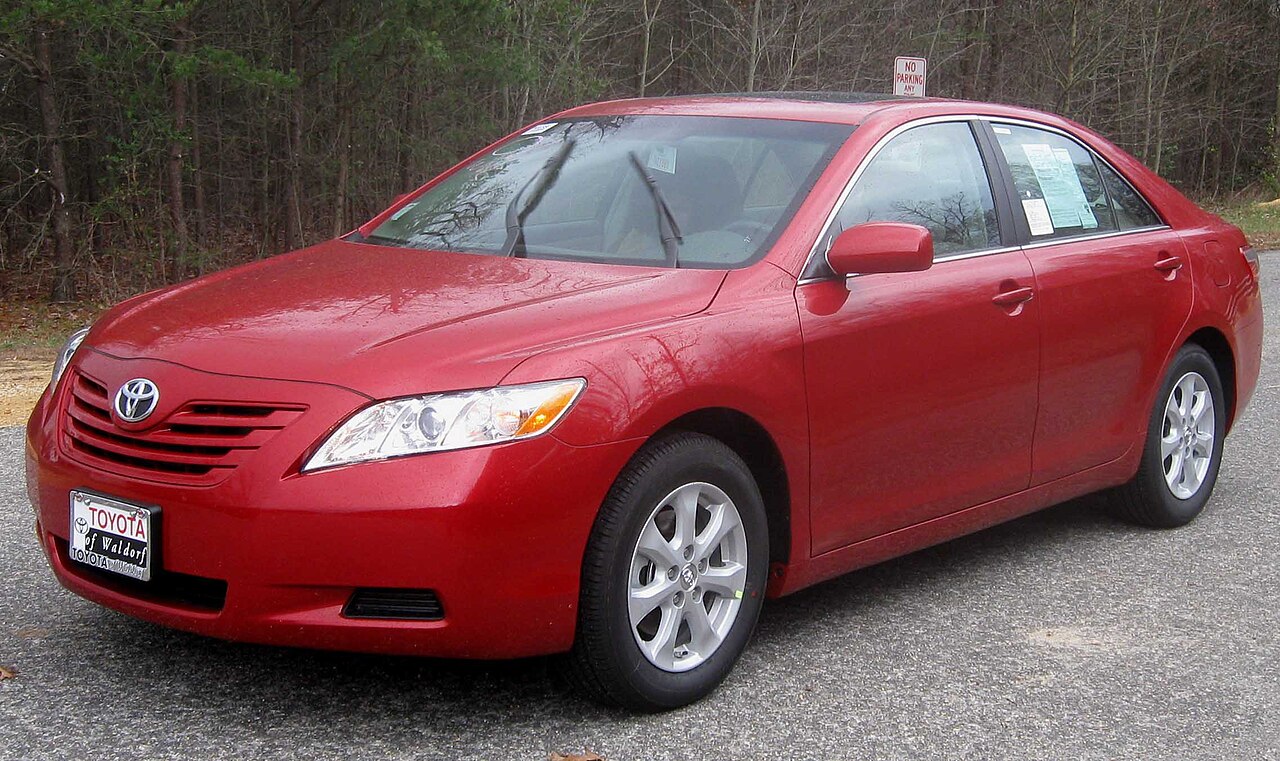

The short answer
Between late 2009 and early 2010 Toyota recalled millions of cars in the United States for two separate problems that could make a car accelerate when the driver did not intend it:
- Floor-mat entrapment. An unsecured or incompatible floor mat, or an all-weather mat stacked on top of another, could catch the accelerator pedal and hold it down. Recall 09V-388, filed in October 2009, covered 4,445,056 vehicles, including the 2007–2010 Camry, 2005–2010 Avalon, 2004–2009 Prius and 2005–2010 Tacoma.
- Sticky pedals. In some pedal assemblies, friction inside the pedal could make it slow to return, or stick partly down. Recall 10V-017, filed in January 2010, covered 2,230,661 vehicles, including the 2007–2010 Camry, 2005–2010 Avalon and 2007–2010 Tundra.
A week later Toyota added about 1.1 million more vehicles under campaign 10V-023, among them the 2008–2010 Highlander and the 2009–2010 Corolla, Matrix and Venza.
A ten-month federal review, with NASA engineers examining Toyota's electronic throttle system, reported in February 2011 that it found no electronic cause for unintended acceleration in Toyotas; the two mechanical problems were the known causes. In 2014 Toyota admitted to the U.S. Department of Justice that it had misled consumers and regulators about them, and paid $1.2 billion.
If you own or are buying one of these Toyotas today, the practical question is simple: has the recall work been done, and is the right floor mat in the car?
The floor mats
The floor-mat recall was about the space under the pedal. Toyota's remedy reshaped or replaced the accelerator pedal, and in some models modified the floor beneath it, so that a mat could not wedge it down. On many of the recalled models Toyota also installed a brake override, so that pressing the brake firmly reduces engine power even if the accelerator is held down. Owners were told to remove any extra or unsecured floor mats in the meantime.
The remedy cannot protect against every mat ever sold. A thick aftermarket mat, or two mats stacked, can still crowd a pedal. That is why the advice has not changed since 2009: one mat, the right one for the car, held by its retaining clips.
The sticky pedals
The sticky-pedal recall concerned the pedal assembly itself, made by a supplier. Wear and condensation could increase friction in a pedal mechanism until it returned slowly or held partly open. Toyota's remedy added a small steel reinforcement bar to reduce the friction, or replaced the pedal assembly.
What the investigations found
NHTSA described its response in testimony to Congress in May 2010 (NHTSA testimony, May 20, 2010):
- Toyota agreed to pay a $16,375,000 civil penalty, then the maximum the law allowed, for failing to tell NHTSA about the sticky pedal defect promptly. With penalties over its handling of other recalls, Toyota's total fines came to $48.8 million.
- NHTSA had spoken with nearly 100 owners who reported unintended acceleration after a recall repair. It found a few repairs done incorrectly by dealers, which Toyota corrected, and no evidence that properly performed repairs failed.
- NASA was helping NHTSA review the electronic throttle control system.
That review reported in February 2011. NASA engineers had examined nine vehicles, reviewed 280,000 lines of software and exposed cars to electromagnetic radiation; the Transportation Secretary said there was "no electronic-based cause" (NPR, February 2011). Not everyone accepted that conclusion, and later court cases examined Toyota's software in detail, but the federal finding stands.
In March 2014 Toyota entered a deferred prosecution agreement with the Justice Department (U.S. Attorney's announcement, March 19, 2014). It admitted that in late 2009 it had said its floor-mat recall addressed the root cause while knowing other models with similar designs were not recalled, and that it had concealed the sticky-pedal problem from NHTSA. It paid $1.2 billion.
What owners reported
We counted the owner complaints filed with NHTSA about the speed control system for the Toyota models most involved, model years 2002 to 2010, as the federal file stood on September 21, 2026. They are unverified, counted once per complaint number.
- 7,275 speed-control complaints are on record for these cars. They report 2,425 crashes, 1,113 injuries and 66 deaths. Those are owners' accounts, not findings, and many concern events where the cause was never established.
- 4,160 complaints describe unintended or sudden acceleration, surging, a stuck pedal, a floor mat or a runaway car in the owner's words.
- The surge came with the news. 484 speed-control complaints were filed in 2009, then 3,464 in 2010 alone, the year of the recalls, the hearings and the coverage. Many describe events from years earlier. Filings fell back to 381 in 2011.
- The 2007 Camry stands out. It has 683 speed-control complaints, almost as many as the next four Camry years combined (694). It was also the first year of a new generation, with a redesigned pedal and floor area.
The 2010 surge is the clearest example in the federal file of something worth knowing about all complaint data: owners file when a problem is in the news. A year with many complaints can be a year with a real defect, a year with a lot of publicity, or both. This site does not compare one model with another on complaint counts for that reason, and when it compares years within a generation it uses the same window of time for each.
The model-year pages carry each year's full record, including these recalls: the 2007, 2008, 2009 and 2010 Camry, the 2009 Corolla, the 2008 Prius and the 2008 Tacoma.
What to do if you own one
Check the VIN. Run it at NHTSA's recall lookup. Cars of this age have often changed hands several times, and an open recall can survive every sale.
Check the floor mat. One mat on the driver's side, made for that car, held by the retaining hooks. No mat on top of a mat. This costs nothing and is the single most useful thing an owner of any car can do about pedal entrapment.
Know what to do if the car accelerates on its own. Press the brake firmly and steadily with both feet if needed; do not pump it. Shift to neutral. Steer to a safe place, stop and turn the engine off. On cars with a push-button start, holding the button for about three seconds turns the engine off while moving.
Report it. If it happens, file a complaint at nhtsa.gov/report-a-safety-problem and have the car inspected before driving it again.
What this page cannot tell you
We cannot say what caused any individual incident in the complaint file, and many of them were never investigated. The recall populations are from the federal recall file. The complaint counts are ours and describe what owners reported.
The vehicles this covers
Toyota Avalon 2005 2006 2007 2008 2009 2010
Toyota Camry 2007 2008 2009 2010
Toyota Corolla 2009 2010
Toyota Highlander 2010
Toyota Prius 2004 2005 2006 2007 2008 2009
Toyota RAV4 2009 2010
Toyota Sequoia 2008 2009 2010
Toyota Tacoma 2005 2006 2007 2008 2009 2010
Toyota Tundra 2007 2008 2009 2010
Sources
This piece reads recall, complaints, NHTSA testimony 2010, NHTSA and NASA review 2011, U.S. Department of Justice settlement 2014. Recall campaign 09V388000. How every figure on this site is counted is set out on the methodology page. Whether a particular car is affected by a recall depends on its VIN.
More Toyota coverage
 2024–2027 Land Cruiser fuel leak recall: what owners should knowRecalls | 5 days ago
 Toyota Tundra V35A engine recall: 2022–2024 owners' guideGuides | 9 days ago
 Toyota widens Tundra V35A engine recall to 2024 trucksRecalls | 9 days ago
- Toyota recalls 1.85 million RAV4s over battery clamp shortsRecalls | 12 days ago