Ford Escape years to avoid? What 29,587 owner complaints show
Five Escape years stand out in their first three years on the road. The biggest engine story, 2017–2019 coolant complaints, mostly arrived after that window closed.

The short answer
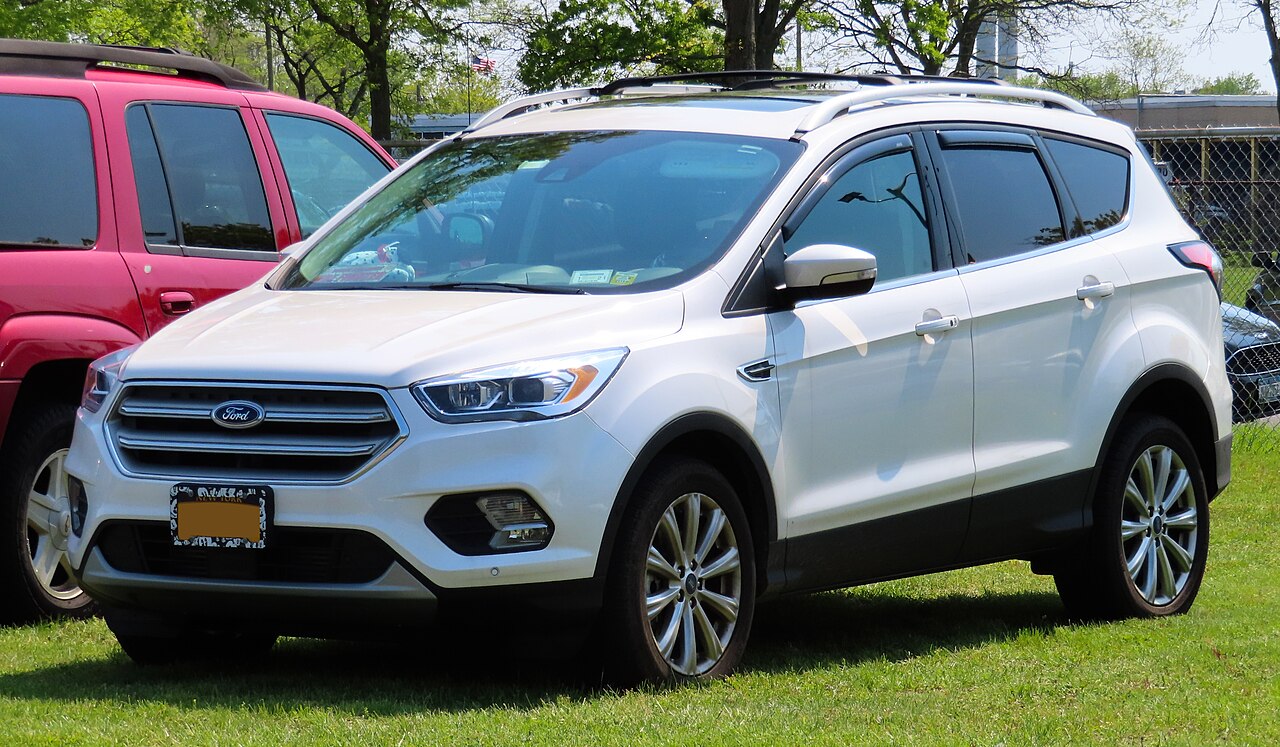
No federal record says which Escape is a bad buy. What the record does show is which model years drew more owner complaints than the rest of their own generation, and which systems those complaints name. On that basis five Escape years stand out in their first three years on the road: 2001, 2002, 2011, 2013 and 2017.
The number that matters most for a used-car shopper is not on that list. The 2017, 2018 and 2019 Escape carry 2,455 complaints that describe coolant getting into the engine. Only 34 of them were filed in each car's first three years. More than nine in ten arrived in 2023 or later, when the cars were at least four years old. There is no recall for that failure and no NHTSA investigation.
Whether a particular car is affected by any recall depends on its VIN. Check it at nhtsa.gov/recalls.
How we count, and what the count is not
The site holds 29,587 NHTSA owner complaints for the Escape, model years 2001 to 2026, in four generations (data as of November 17, 2026). A raw total favours old cars, which have had more years to collect complaints, and popular ones, which have more owners to file them. So each year is compared only with the other years of its own generation, over the same span: complaints received up to two calendar years after its model year. A year is named when that count is at least 1.5 times the median of its generation.
These are counts of reports, not failure rates. No public source gives U.S. Escape sales by model year, so nothing here is divided by the number of cars on the road. Complaints are unverified accounts, and filing tends to rise after news coverage or a recall. The full year-by-year table is on the Ford Escape model page.
First generation, 2001–2007
The 2001 Escape drew 468 complaints in its first three years, 4.0 times the median of its generation. The 2002 drew 418, 3.5 times. Both are the generation's most-complained-about years by a wide margin. Engine is the largest group in both, at 31% and 32% of complaints that name a component.
The quietest years of the generation were 2004 (60 complaints in the first three years) and 2006 (64). The 2007 has too few complaints in its window to compare. These cars are now 19 to 25 years old, so any one example will say more about how it was kept than its model year does.
Second generation, 2008–2012
The 2011 Escape is the year that stands out here: 451 complaints in its first three years, 2.7 times the generation median of 168.
Across this generation, steering is the largest complaint group in three of the five compared years. In the 2008 Escape it accounts for 52% of complaints that name a component (1,238 of 2,385), with a median reported mileage of 116,000.
That matches a recall. In May 2014 Ford filed recall 14V284 for 740,878 Escape and Mercury Mariner vehicles from the 2008–2011 model years, built from August 18, 2006, to September 11, 2010. Ford's report to NHTSA says the steering torque sensor may fail to detect driver input, and the system could then remove electric power steering assist, making the vehicle harder to steer at low speed. Dealers update the power steering and instrument cluster software, and replace parts on vehicles that show a history of the fault.
Third generation, 2013–2019
This generation holds the most complaints, and engine is the largest group in five of its seven years. Two years are named: 2013, with 389 complaints in its first three years (2.8 times the median of 141), and 2017, with 221 (1.6 times).
Both are years an engine arrived. EPA's fuel economy listings show the 2013 Escape introducing a 1.6L four-cylinder alongside a 2.0L and a 2.5L. The 1.6L stays through 2016. In 2017 it is replaced by a 1.5L, while the 2.0L and 2.5L continue.
2013–2014: the 1.6L and its fire recalls
Of the 2013 Escape's complaints that name a component, 55% concern the engine (1,430). NHTSA records three recalls for the 2013 model's 1.6L engine, all with a fire risk in Ford's own description:
- 12V431, September 2012, 6,146 vehicles: a cylinder head cup plug can come loose, and leaking coolant can ignite on the hot engine.
- 12V551, December 2012, 80,057 Escape and Fusion vehicles: coolant leaks can make the engine overheat and leak flammable fluids onto the exhaust.
- 13V583 (Ford 13S12), November 2013, 139,917 vehicles: localized overheating can crack the cylinder head and let oil leak onto hot surfaces.
The 2014 Escape's 1.6L is covered by 17V209, filed in March 2017 for 208,584 vehicles across four Ford models: driven with too little coolant, the cylinder head can overheat, crack and leak oil. The remedy adds a coolant level sensor. Owners of the 2013 and 2014 Escape flagged a fire in 91 and 104 complaints respectively.
2017–2019: the complaints that came late
The 2017 Escape is named for its first three years, but the larger story sits in the years after. Engine accounts for 76% of its complaints that name a component (2,008), and for 81% of the 2018 Escape's (1,461). Yet the 2018 drew only 110 complaints in its first three years, 0.8 times its generation's median, which makes it look like one of the quieter years.
We searched NHTSA's public complaint file for 2017–2019 Escape complaints that mention coolant together with a cylinder, the engine block, the head gasket, white smoke, a misfire or "intrusion". There are 2,455: 1,278 for the 2017, 941 for the 2018 and 236 for the 2019. 1,339 of them use the word "intrusion".
When they were filed is the finding:
- In each car's first three years: 34 (10 for the 2017, 20 for the 2018, 4 for the 2019).
- In 2023 or later: 2,266, or 92%.
- The median mileage of all 2017 engine complaints is 77,000; for the 2018, 85,000.
The first such complaint for the 2017 came on January 31, 2018. For that model year, filings stayed at 24 or fewer a year through 2021, reached 60 in 2022, then climbed to 182 in 2023 and 398 in 2024.
NHTSA lists no recall for this failure on the 2017–2019 Escape. The only engine-related recall for those years, 26V011 (January 2026), covers a cracking engine block heater on 2.0L engines, not coolant inside the cylinders. The site records no NHTSA investigation for the 2016 to 2019 model years.
This is also why a three-year comparison can miss a failure. It catches defects that show up early, like the 2013's. It cannot see one that appears at 70,000 to 90,000 miles. For a 2017–2019 Escape, read the system breakdown on its model-year page alongside the comparison.
Fourth generation, 2020 onward
No year from 2020 to 2023 stands out from the generation median of 193 complaints in the first three years. The 2023 drew the fewest, 86. The 2024 and later years have not been on the road long enough to compare.
The 2020 to 2022 years each carry 21 to 25 recalls, more than any earlier Escape year. Recall counts follow how many campaigns a year falls into, and several are large multi-model recalls. On the 2020 Escape, body and structure is the largest complaint group, at 46%. All four years from 2017 to 2020 hold a five-star overall NCAP rating, so crash protection does not separate them.
What to check before you buy
- Run the VIN at nhtsa.gov/recalls. It shows any open recall for that car, including 14V284 (2008–2011), 13V583 (2013) and 17V209 (2014).
- Know the engine. On a 2013–2014 Escape the 1.6L carries the fire recalls above. On a 2017–2019 Escape, owners who name their engine in these coolant complaints name the 1.5L more often than the 2.0L (261 mentions against 175).
- Ask for records of coolant top-ups, overheating warnings, misfires or engine work, especially on a 2017–2019 car past about 60,000 miles. No recall covers that repair, so the owner's records are the only history.
- Report a problem you have yourself at nhtsa.gov/report-a-safety-problem. Complaints are how NHTSA notices a pattern.
- If a recall letter has arrived but the repair is not ready, see what an interim notice means.
What this page cannot tell you
It cannot tell you whether one Escape will fail. Complaint counts are not divided by sales, owners chose whether to report, and NHTSA does not verify individual complaints. The coolant figures are a keyword count of owner accounts. Some describe other faults, and some coolant failures are described in other words. Fewer than one in five of these complaints says which engine the car has, so any link to one engine comes from those owners, not from an NHTSA or Ford finding. A missing recall is not proof that no defect exists, and a recall is not proof that every car fails.
The vehicles this covers
Ford Escape 2001 2002 2008 2011 2013 2014 2017 2018 2019 2020
Sources
This piece reads recall, complaints, investigation, epa, ncap, NHTSA recall 14V284 (2008–2011 Escape power steering), NHTSA recalls 12V431 / 12V551 / 13V583 (2013 Escape 1.6L), NHTSA recall 17V209 (2014 Escape 1.6L), NHTSA recall 26V011 (2013–2019 Escape 2.0L block heater), EPA fuel economy engine listings 2013–2017 Escape. How every figure on this site is counted is set out on the methodology page. Whether a particular car is affected by a recall depends on its VIN.
More Ford coverage
 Ford EcoSport years to avoid? Check the engine firstGuides | 2 days ago
 Recall letter but no parts yet: what the interim notice means and what to doGuides | 16 days ago
 2026–2027 Ford F-150 tailgate cable recall: 18,412 trucksRecalls | 21 days ago
 2022–2024 Ford Maverick camera recall fix under NHTSA reviewInvestigations | 24 days ago